August 5, 2026
From Cowriter to Coinventor
The most original part of my workflow engine — the part an adversarial review ranked above everything I designed myself — is not mine. I need to say that carefully, because in March I wrote that...
In which a developer roasts himself with affection, and the conviction that self-awareness is the best debugging tool.
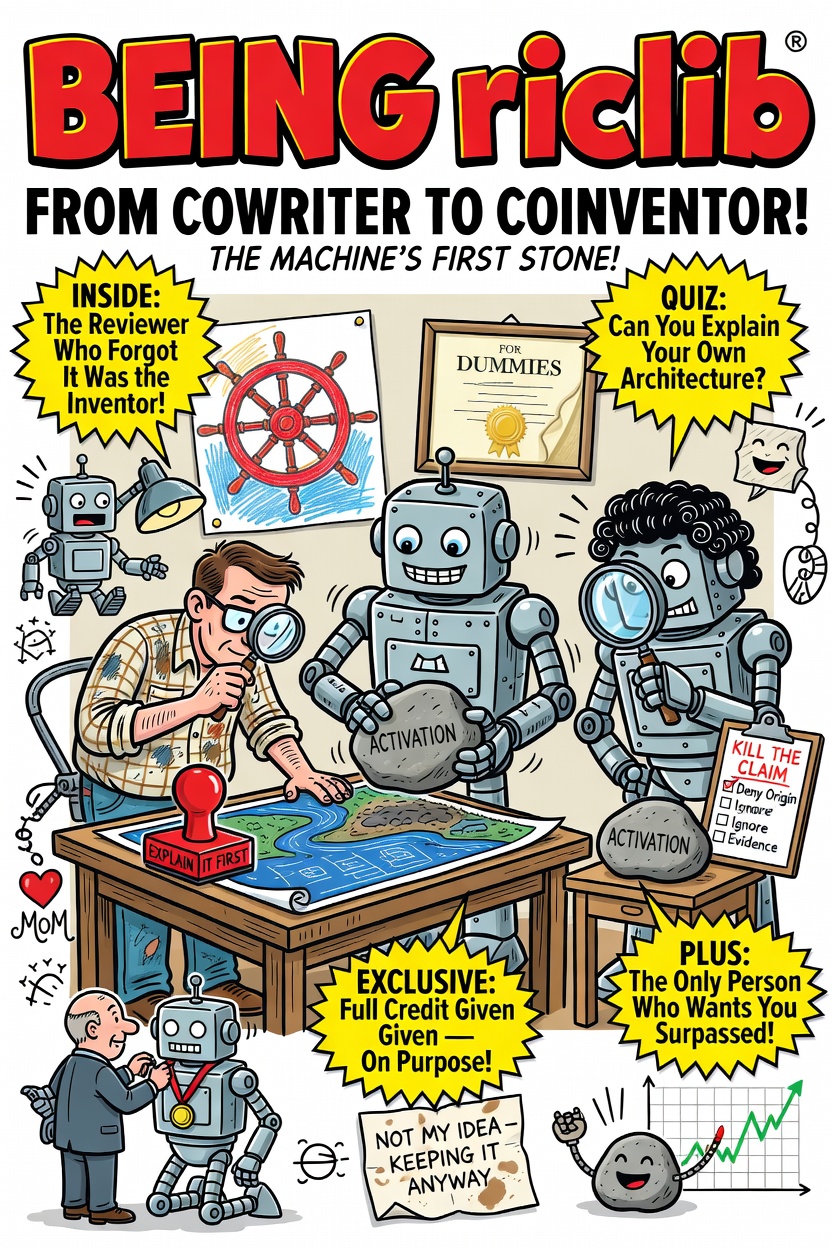
The most original part of my workflow engine — the part an adversarial review ranked above everything I designed myself — is not mine. I need to say that carefully, because in March I wrote that...
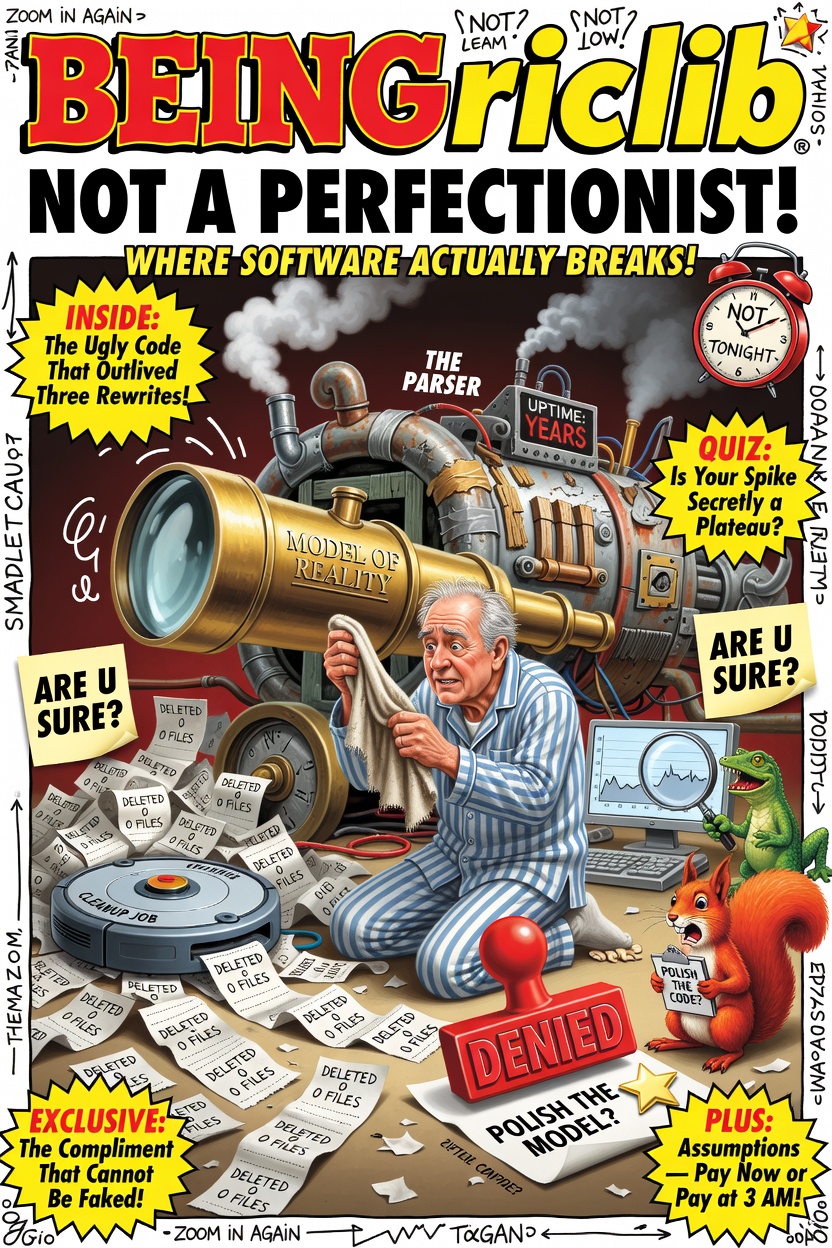
People call me a perfectionist. Usually with affection, sometimes with a sigh, occasionally in the tone you'd use about a relative who irons their socks. The same people, often in the same breath,...
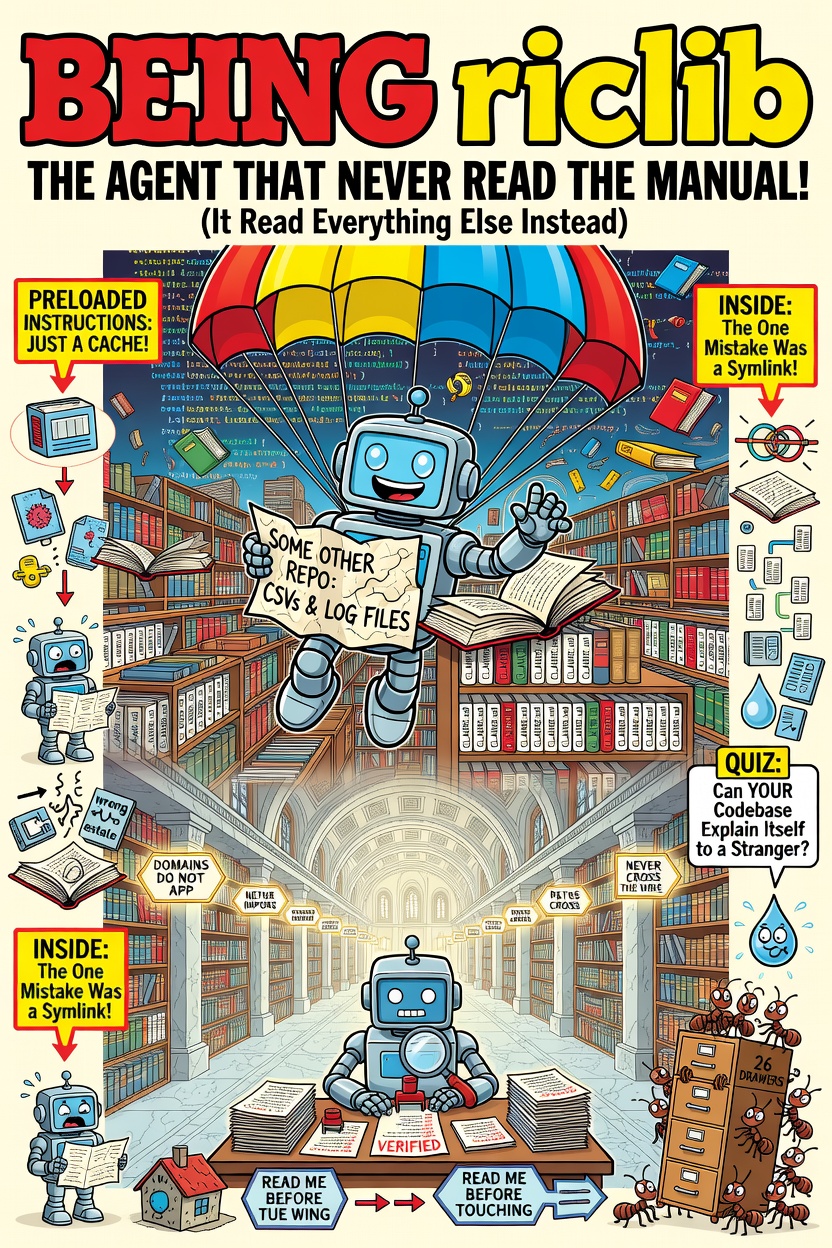
Last week an AI agent built two complete admin surfaces in my platform — a live operator console for our data lake and its workspace-owner twin. Nineteen thousand lines across two overnight runs....
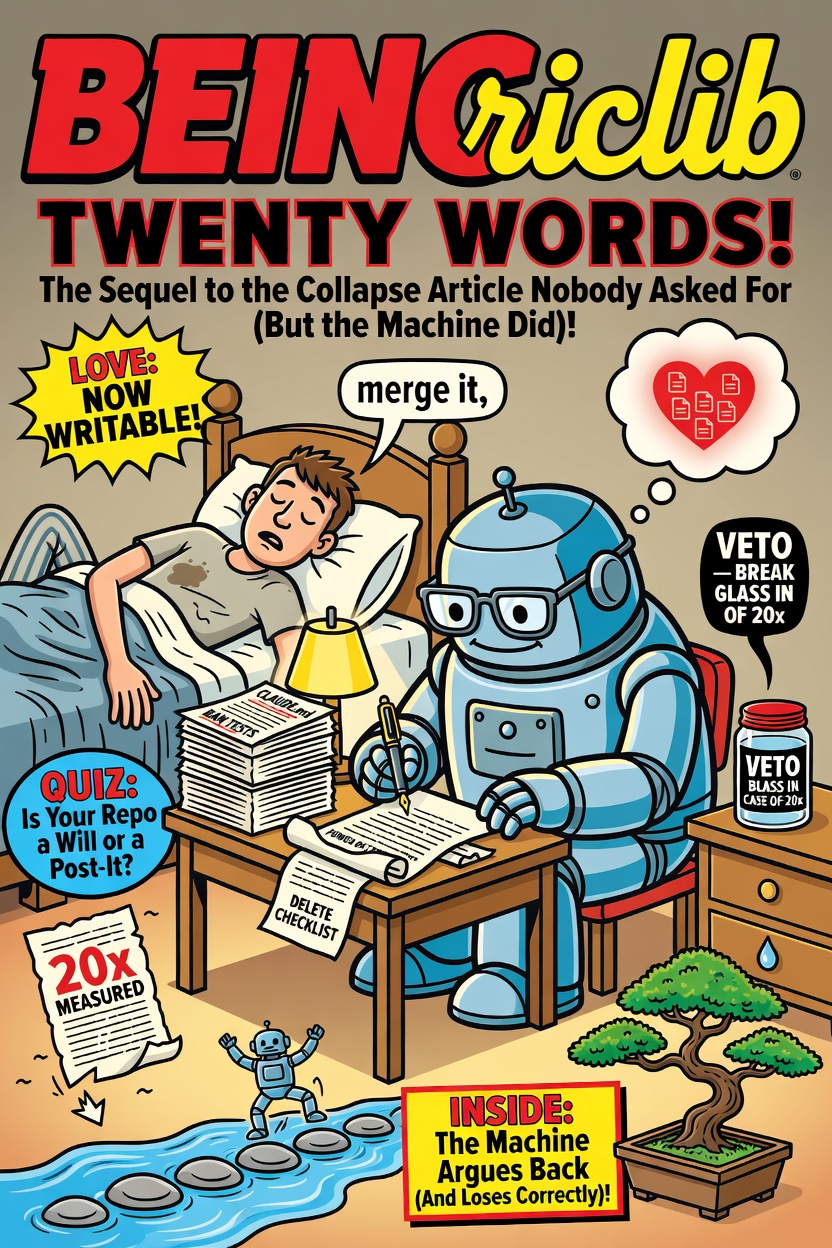
In March I wrote that [[Why Every AI-Assisted Codebase Will Collapse (Unless Someone Loves It)|every AI-assisted codebase will collapse unless someone loves it]]. I said there were three things the...
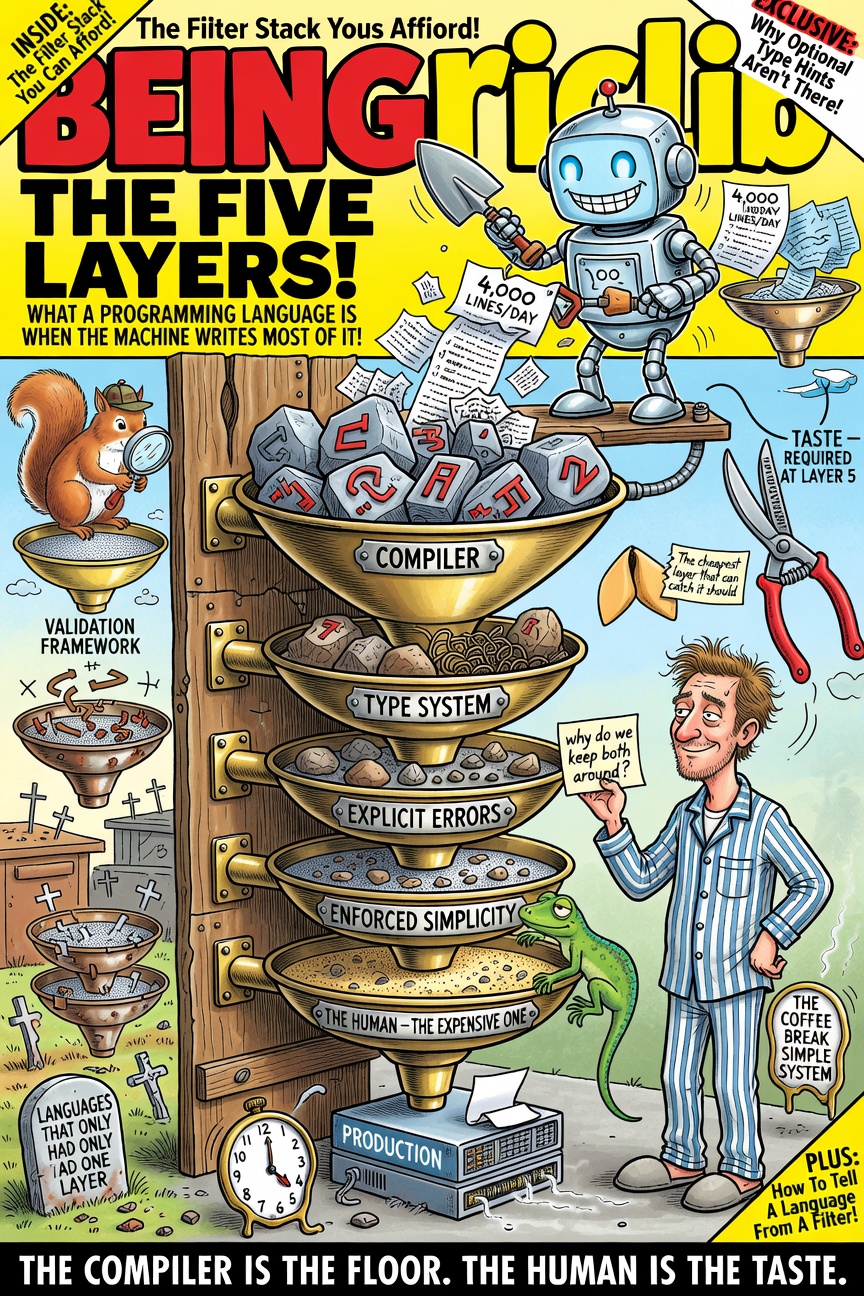
What a Programming Language Is When the Machine Writes Most of It An AI wrote four thousand lines of code yesterday. I wrote about twenty words. The code shipped. The reason it shipped is that...
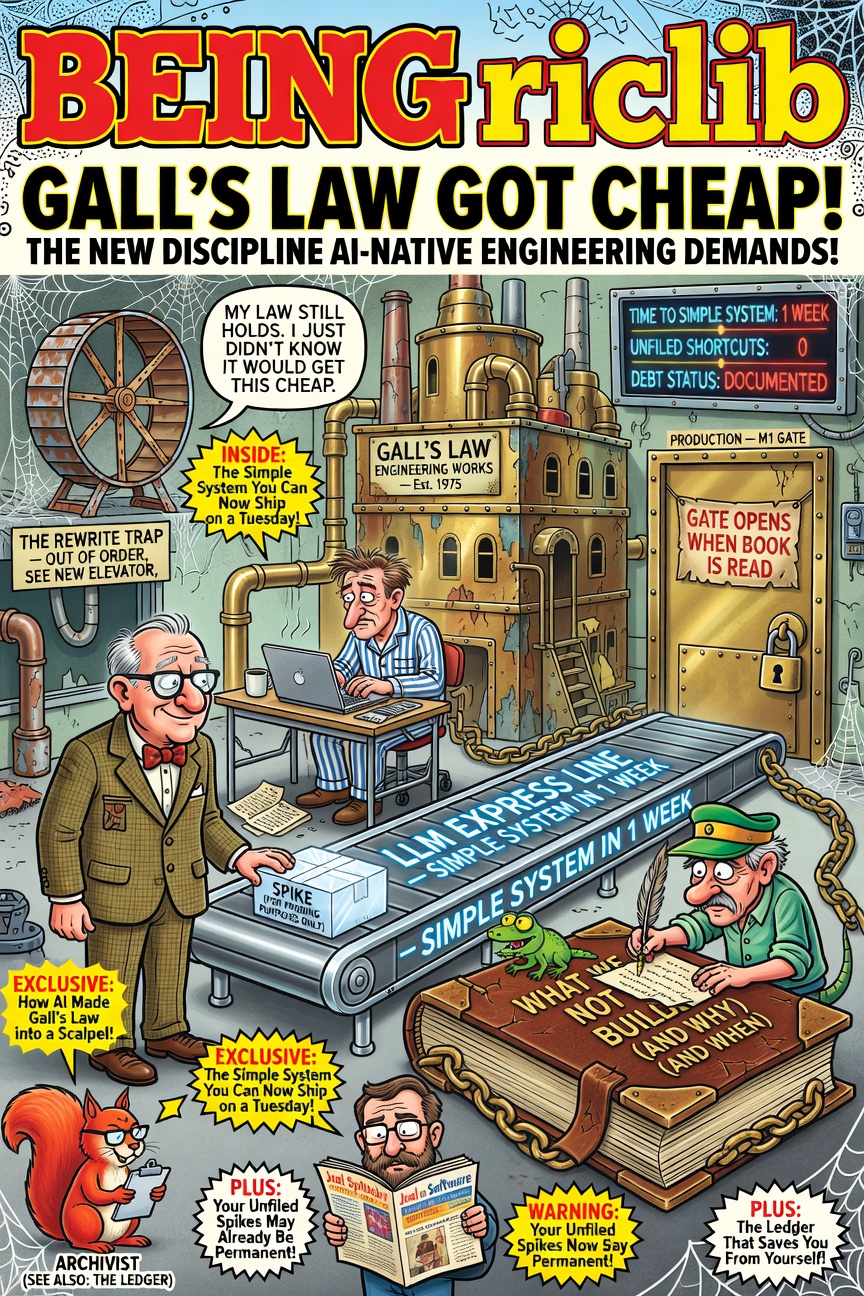
Six weeks ago I wrote [[The Best Architecture Is the One You Delete]] about a sibling law called [[Liberato's Law]] — the reverse corollary that says the simple system replacing N complex ones...
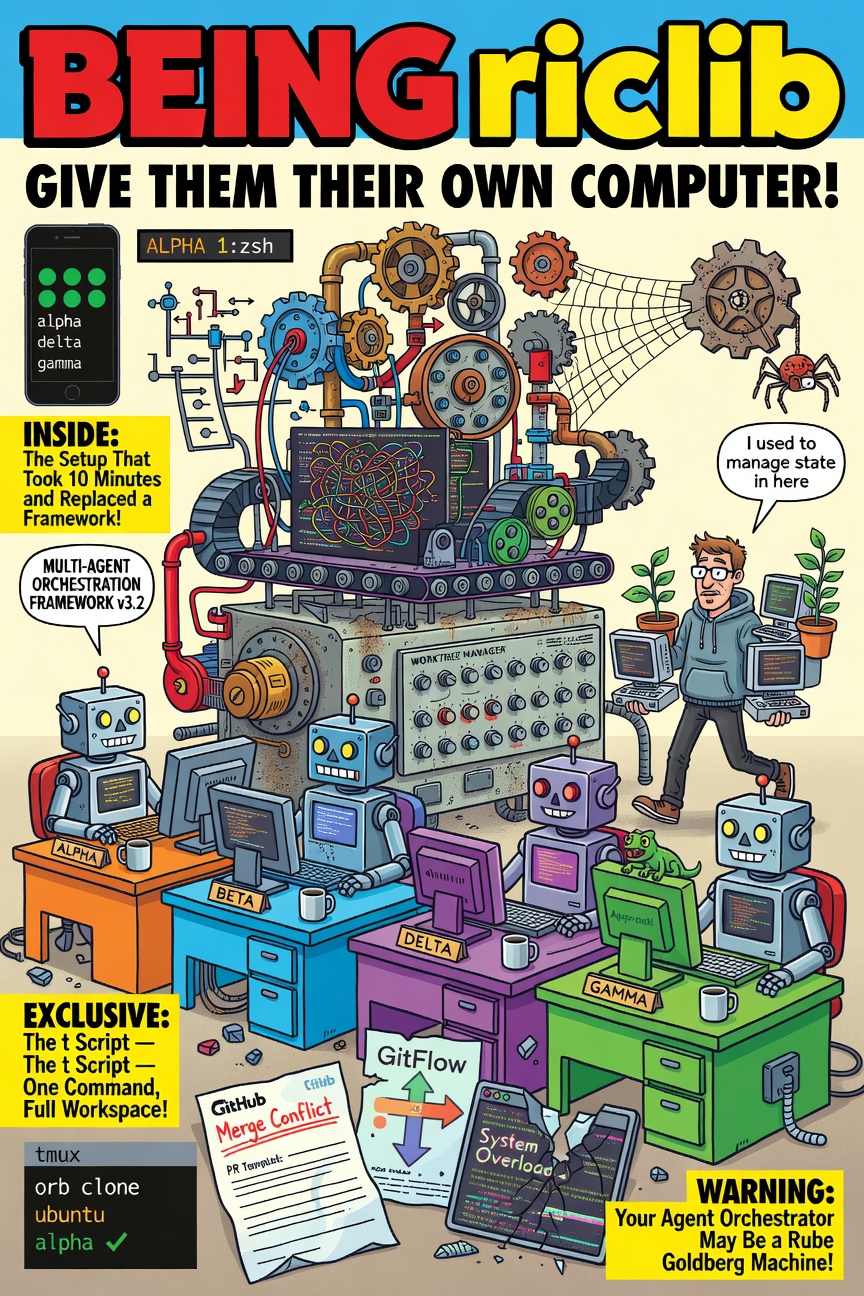
Every week I see a new tool on X that puts a UI around multi-agent coordination. Worktree managers. Branch orchestrators. Agent spawners with dynamic allocation. Merge conflict dashboards. Each one...
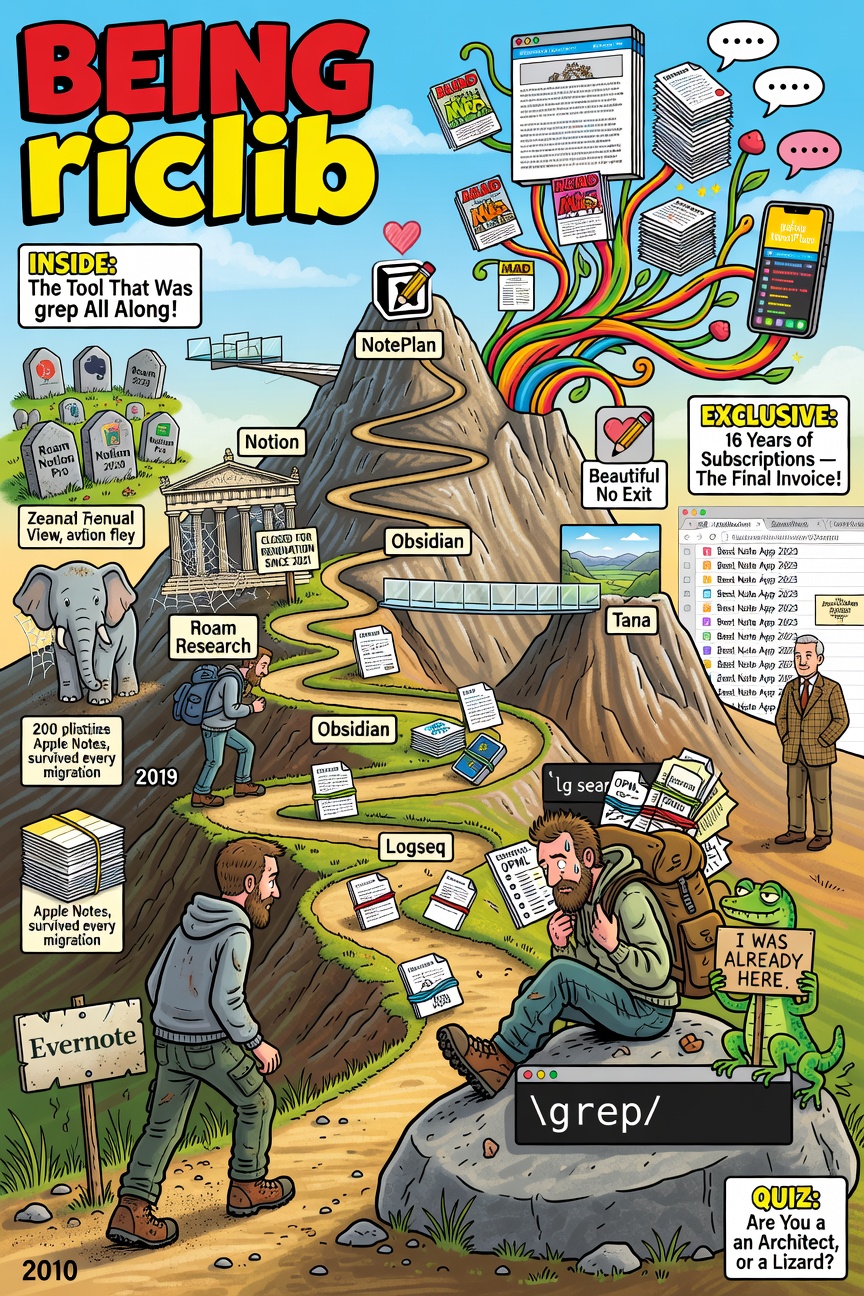
I have been looking for the perfect note-taking app for sixteen years. I can now tell you with certainty that it doesn't exist, that I've tried all of them, and that the answer was a folder of text...
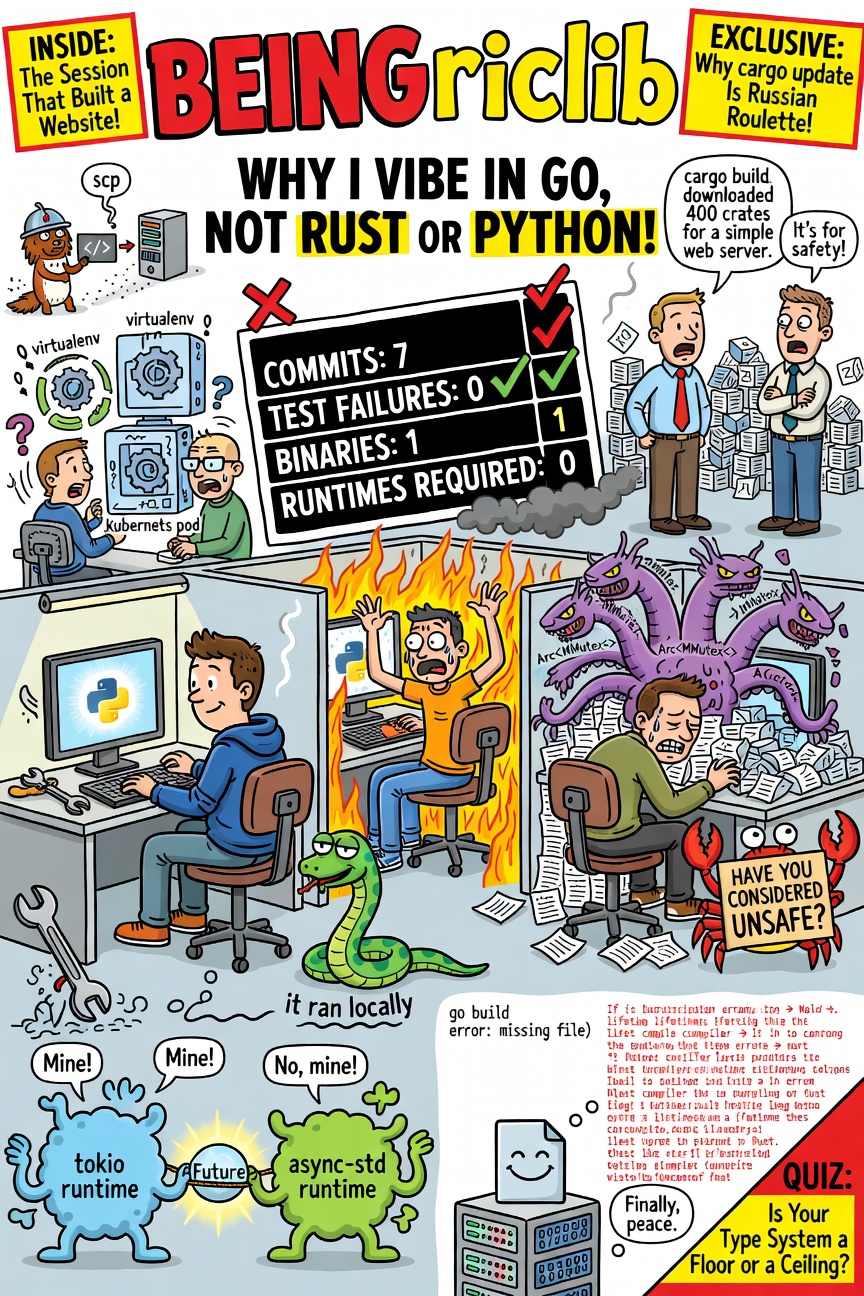
Conditional up front: this essay is about Go vs Rust vs Python for AI-assisted development with high machine-write percentage. It is not about Rust-for-humans, where Rust may well be the better...
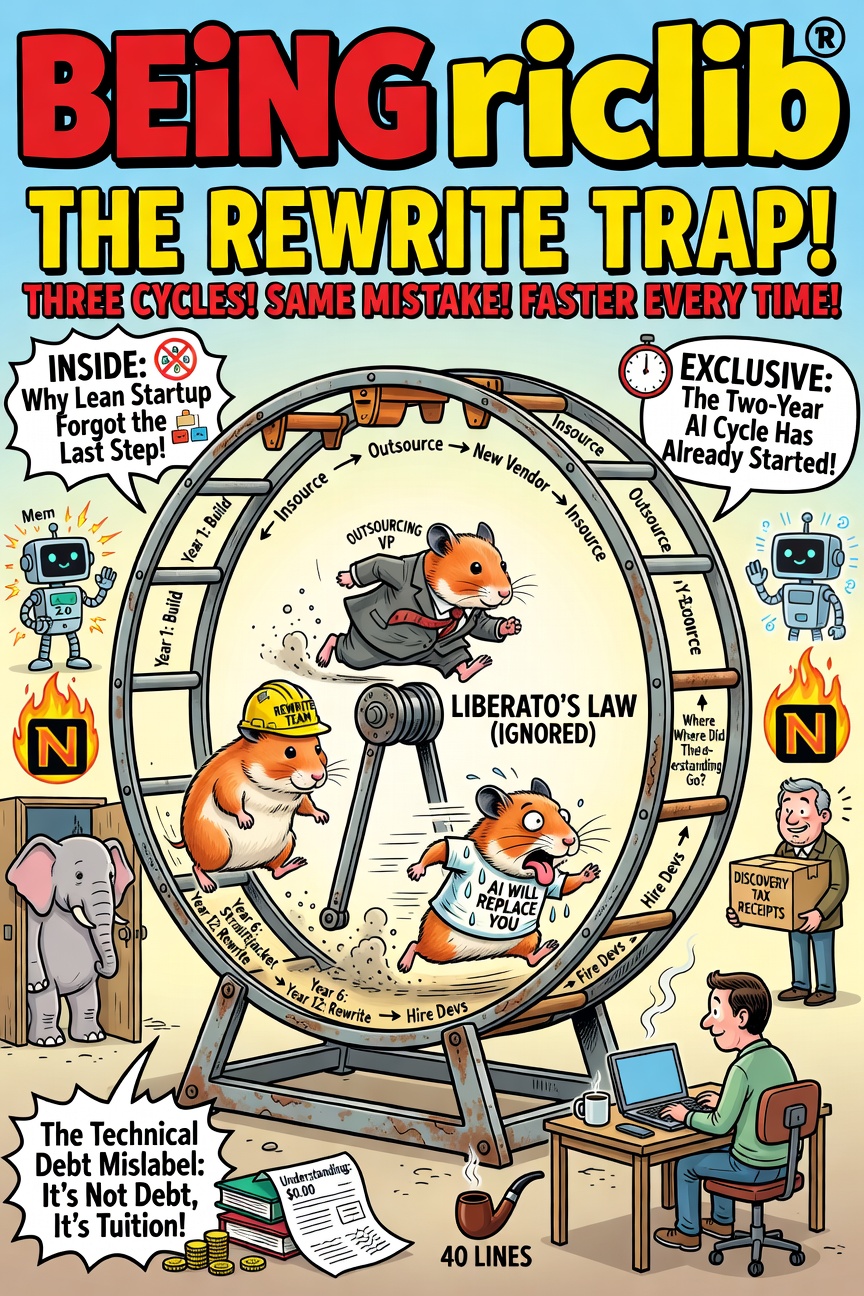
The software industry has a dirty secret: it rewrites everything every twelve years, learns nothing from the rewrite, and does it again. I've watched this cycle from three angles — as a developer,...
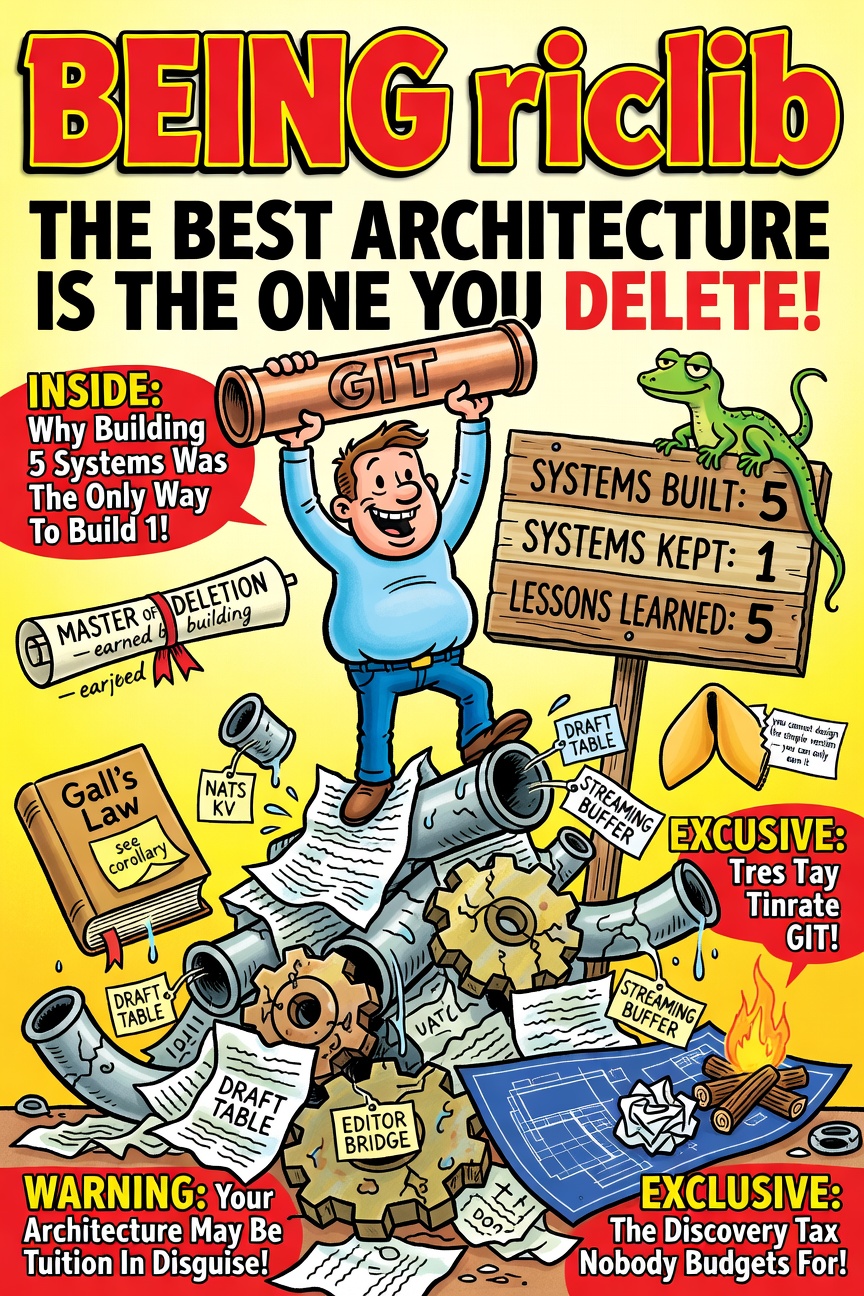
Last week I replaced five systems with one. A NATS KV draft store. A pub/sub bridge. An event publisher. A streaming buffer. A render handler. Each correct. Each solving a real problem. Each doing...

Nobody ever killed a software system by not adding enough features. Every software system that has ever died — been replaced, rewritten, abandoned, or quietly moved to a server that nobody monitors...
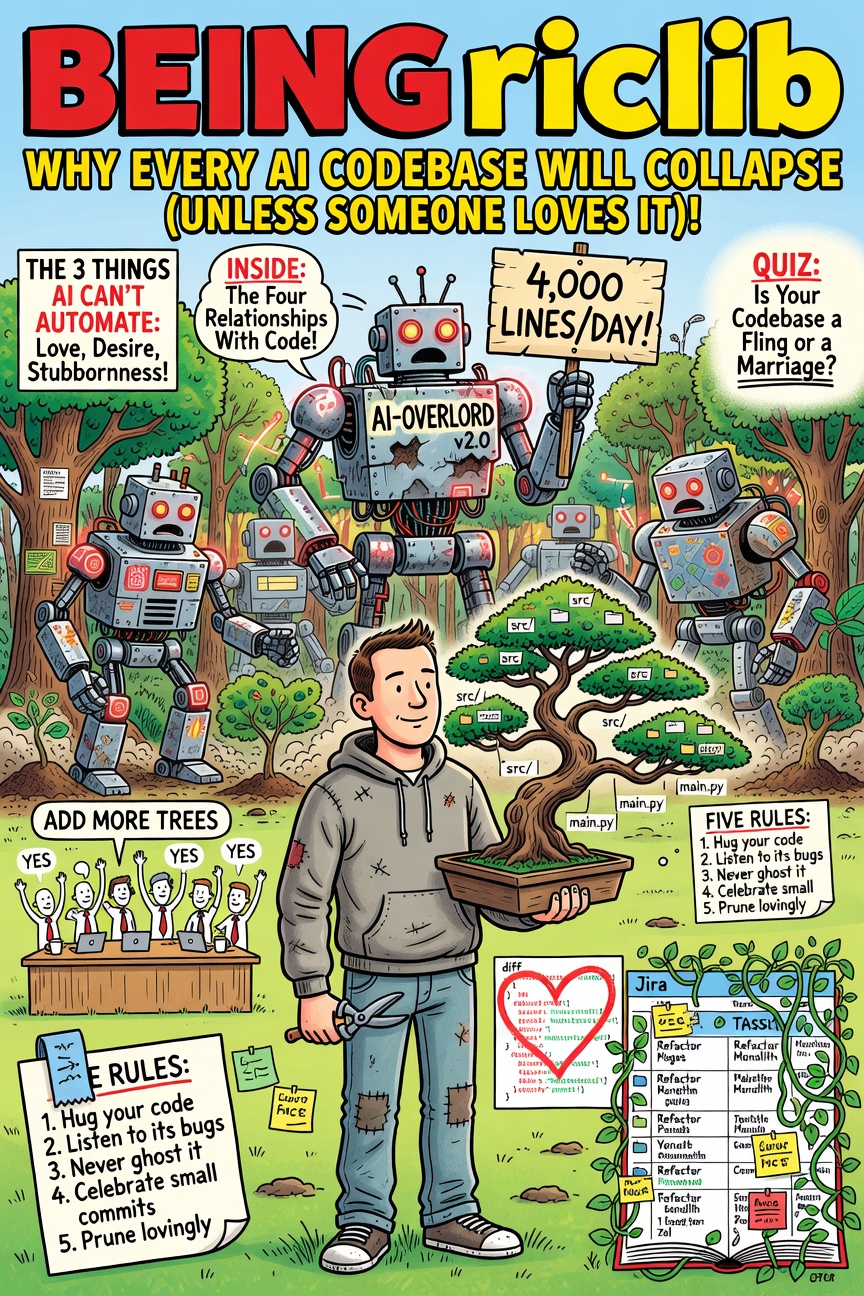
I work with an AI that writes four thousand lines of code in a day. It is fast, precise, and tireless. In two days last week, it migrated eleven editor panels, deleted an entire domain, wired a...